
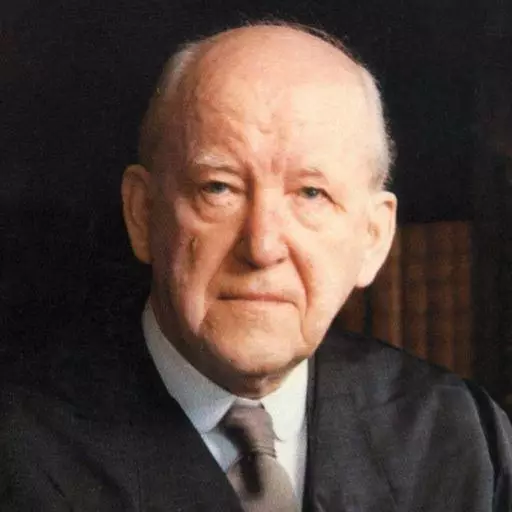
One Body
Dr. Martyn Lloyd-Jones: I should like to call your attention this evening to the fourth and the fifth verses in the twelfth chapter of Paul's epistle to the Romans. The epistle to the Romans, chapter 12, verses 4 and 5. "For as we have many members in one body, and all members have not the same office: So we, being many, are one body in Christ, and every one members one of another."
We really have to deal this evening with the fifth verse: "So we, being many, are one body in Christ, and every one members one of another." The word "so," of course, reminds us immediately that what the Apostle is doing in this fifth verse is to apply the illustration which he has been using in verse 4 to describe the state and the condition and the nature of the church.
That's his whole object, of course; he's dealing now with life in the realm of the church and some of the difficulties that arise, and especially in connection with the use and employment of the varying gifts which God in His grace has given to us as His people. This has been throughout the centuries a great cause of trouble in the life and the experience of the church, both in general and in particular Christian lives.
The whole trouble, as the Apostle is showing us here, is due to the fact that we have failed in some respect or another to realize the true nature of the church. In order to enlighten us on that, he has used this great illustration which we were considering last Friday night of the body—the illustration that he uses in so many of his epistles because he obviously felt that it was one which conveyed this particular aspect concerning the unity of the church more clearly than any other.
Now, here we come then to the way in which he uses the illustration. This fifth verse in the 12th chapter of this epistle to the Romans is a most important verse. It is the verse perhaps which more clearly than any other in this particular epistle gives us an understanding of the Apostle's doctrine of the church. He does it in greater length in other places, but in this particular epistle, this is therefore a very crucial verse.
He puts in summary form what he elaborates at great length, particularly in the first epistle to the Corinthians, but you get the teaching also in other epistles. Now, this is always important, of course, but I feel that it has an exceptional and an unusual importance and significance at the present time. The age in which you and I are living is an age which is talking more about church unity than perhaps has been the case in the history of the church for many, many long centuries.
Ever since the Reformation, in a sense, there has been comparatively little talk about the unity of the church. That was a great division, and it led to further subdivisions. So it's not at all surprising that there has not been much attention given and paid to the doctrine of the unity of the church. I think we must all plead guilty in this respect and plead guilty on behalf of many of our forefathers for the reasons which I'm going to put before you.
But today, the position is very different indeed. By now, there's scarcely anything else ever heard in the church speaking generally but this whole question of unity. Every day you see some reference to it in your newspapers. One section of the church has been holding a conference or a council to promote it and another one does the same, and they're all talking about this. This has become the great theme of the Christian church at the present time.
Therefore, I say, it is unusually important and essential that we should understand something of the teaching of the great Apostle on this vital subject. Here we've got it, I say, in a summary. Now, I've often had occasion to say in dealing with this epistle to the Romans that we must always remember that what we've got here is a summary of doctrine. I think I've put it before like this—let me do so once more.
You remember the incident in the 20th chapter of the book of the Acts of the Apostles where we're told that the Apostle went on preaching for so many long hours that that young man fell asleep and fell down dead. Many people seem to be amazed at the fact that it was possible for the Apostle to go on speaking for such a long time. They would almost say that you could read the whole of the New Testament in that time. So what was he doing?
Well, the answer to that is that in these epistles we've only got summaries. Our business is not to give summaries of summaries; our business is to expand the summary, to draw out the doctrine. That is the function of teaching and of preaching, and that is what we've got to do this evening. What he says is this: "We, being many, are one body in Christ, and every one members one of another."
But look at the content of that. Let's realize some of the things that at any rate that tells us about the church and particularly about the unity of the church. That's the thing he's concerned about is the unity of the church. He's so afraid that it may be in any way torn or marred by a false view of these particular gifts that are given to particular people in the church.
Now then, let's consider some of the things therefore which he tells us here about the church and her unity. The first proposition he lays down is that the church is the body of Christ. "We, being many, are one body in Christ." Now, here is the great New Testament teaching about the nature of the church. What does it mean? Well, it means something like this: The church is a spiritual society. She's a supernatural society. She's not a human institution. She's not a human society.
Now, you look at the whole history of the church and you'll find that that has obviously been forgotten. Any identification of the church and the state is a complete denial of this at once. Any view that everybody in a parish is a Christian is a blink denial of all this. Here is something in Christ. It's something therefore, I say, which is spiritual—not natural, not material, not physical, not human. It is superhuman; it is supernatural. It is a spiritual society.
That goes on, you see, we can expand that and put it further like this: As members of the church, we are not merely people who believe certain things, even about our Lord. We are not merely people who believe His teaching. You can do all that and not be a member of the church in this sense. If you regard the church as a society, as a human institution, well, you can join it as you may join any other club or any other human society or organization.
But starting with this fundamental proposition that the church is a spiritual body, a spiritual society, we've got to emphasize that merely to believe things about Him doesn't mean that we're really and truly members of the church and parts of the church. Neither does believing aspects of His teaching.
I'm putting it like this because you know there is a very common idea abroad today that what makes a man a Christian and a member of the church is that he's interested in the teaching of Jesus Christ—"Jesus" they generally call Him—and he's concerned in applying the teaching of Jesus to his own life and to the life of other people and believes perhaps that that's the best way of handling a state or running a state, that's the way of putting an end to war, and so on and so forth.
While I'm saying that all that may be all right up to a point, that alone is not sufficient for this reason: that by definition, a member of the Christian church in the New Testament sense is one who is in a vital, living relationship to the Lord Jesus Christ. The whole analogy of the body proves that.
The Apostle's argument in verse 4 was: "As we have many members in one body, and all members have not the same office." It's the picture of a body consisting of a head and the other parts, but all controlled by the head and all this great nervous system that starts from that. Well now, it's exactly here when he comes to apply it: "We are one body in Christ."
Sometimes he refers to the church as "Christ." He does it in 1 Corinthians 12. "So also," he says, "is Christ," meaning the church. I think you'll find that in the 12th verse of the first epistle to the Corinthians, chapter 12. Very well then, here is the New Testament basic definition of the church: The church is the body of Christ. He is the head, she is the body, and we, as individual members, are parts of this body.
That's, you see, at once emphasizing that it is a vital and a living relationship. He dwells in the church, it is His life and fullness that is in the church, and He functions in and through the church. You remember how Luke, starting his book of the Acts of the Apostles, reminds us of that? He says: "The former treatise have I made, O Theophilus, of all that Jesus began both to do and teach."
Then he goes on to tell us about what the church did, but it's Jesus who's doing it through the church. She is, in other words, His body. Now, this, of course, is quite basic and fundamental to any thoughts about the church. Before we begin to talk about amalgamation of churches, we really should start by asking the question: What is the church? What is a church? What is the church? And here is the point at which we must needs of necessity start: She is a spiritual society. She is a spiritual body.
Then I go on to lay down a second proposition which is this—and it follows, of course, from the analogy—the church is one. "We, being many, are one body in Christ." Here is the direct teaching about the unity of the church. And this is something which must be true of necessity. He couldn't have employed that analogy of the body if this wasn't true. A body has only one head, and one head only has one body. You can't have one head with a multiplicity of bodies; that's a monstrosity. One body, one head. Very well, there is only one head, so there can be only one body.
There are many parts and functions, but there is only one body. What the Apostle is saying is this: that all true believers are members of this one and only body which is alone the true church. She consists of the church militant, the church triumphant, or if you prefer it, the church visible, the church invisible. There are those who have belonged to the church who've gone on to glory, but they're still part of this body.
The church, which is the body of Christ, will ultimately consist of all who have ever been true believers throughout all the centuries, Old Testament as well as New. That is the church which is the body of Christ. There is therefore no discussion to be about this question of the unity of the church. It is something that is inevitable. It is something that must be the case.
What I am concerned to emphasize is this: that the teaching is that this is a unity which should be visible. And here comes the message to all of us. Now, there is a danger perhaps in some of us as we talk about the ecumenical movement in giving the impression that we don't believe in the unity of the church. But if you don't believe in the unity of the church, you don't accept the New Testament teaching about the church.
Our Lord made that perfectly plain, didn't He, in His great high priestly prayer? He prays for this. He prays that they all may be one as Thou, Father, art in Me, and I in Thee, that they also may be one in Us, that the world may believe that Thou hast sent Me.
In other words, one of the purposes of the unity is that the church may evangelize the world—"that the world may believe that Thou hast sent Me." So we must be very careful that we don't in talking about the oneness and the unity of the invisible and the visible church, or the church militant and the church triumphant, we must be very careful that we don't fall into a trap here. Very often true Christian people, evangelical people, have been content to say something like this.
They say: "Now, the visible church is, of course, divided up, but the invisible church is not divided up." They draw a distinction which is quite right between the visible and the invisible. And that is true even of the church on earth. There are many people in the church who claim to be members of the church—they belong to the visible church—who may deny everything that we regard as essential in the gospel. But they're members of the church visible.
So we say: "Ah, yes, but what really matters is, are we members of the church invisible?" We say: "We don't know who belongs to the church invisible, but God does. And all who belong to the invisible church are one." That's the unity, they say, about which He is speaking. It is this unity of the invisible church.
Then they have tended to go on to say this: "It doesn't matter what's true about the visible church. Let the visible church be divided up as much as you like, it doesn't matter. And let the true Christians remain in apostate denominations; it doesn't make any difference to the unity of the true, the invisible church."
I'm suggesting to you that that is very wrong, not only in the light of John 17 and the statements in the high priestly prayer of which I've just reminded you, but of this verse that we're dealing with, Romans 12:5, and indeed all the appeals about visible unity which are found in the New Testament.
It is the duty, therefore, I say, of Christian people not only to believe in unity, but to make unity visible. We are sinning if we don't believe in the unity of the church and the visible unity of the true church. We mustn't fall back, I say, on that argument about the invisible church. It is always our duty to be doing our utmost to achieve a visible unity of God's people here on earth. If we don't, we are dismissing our Lord's last petition, as it were, in His high priestly prayer.
Why am I making such a point of this? Well, I'm doing so for one reason only: that while there are people who are talking about a unity that we do not believe in and which I'm going to deal with in a moment, I say that it is imperative that we as evangelicals should not only be concerned about unity amongst believers, we should be more concerned about it than anybody else because we believe the scriptures.
I believe we have a unique opportunity in this respect at this present time. When people are talking about being ready to throw everything into the melting pot, are we ready to do so? Shouldn't all believers come together and make their unity, which is spiritual fundamentally, but make it visible also and thereby bring glory to His name and be the means under His hand of evangelizing a gainsaying world? I think this comes as a challenge to us, and I'm presenting it like that to you.
Are you, as an evangelical, content to be divided from other evangelical people? Are you who are a true believer, are you content not to be in a living visible fellowship with all other true believers? Have we a right, especially at a time like this, to allow secondary, third-rate, tenth-rate matters, matters often of sheer tradition and accident of birth and many other things, to divide us who claim to believe the same truth, who claim to be living members of the living body of Christ? All that is involved here, and I believe it comes to us with an especial urgency in these years through which we are passing.
Very well, the church is one. "We, being many, are one body." He doesn't say in "many bodies," but "one body"—"many" only in the sense that we have differing gifts and different functions, and so on. Very well, but let's go on. Having emphasized in that way that this unity of the church is not something to be argued about, it's something that is stated and which is of necessity true in the light of the illustration, apart from the explicit teaching, I go on to say this as my third proposition: The character of the unity is that it is a spiritual unity.
This I think you'll see again follows of necessity. Look at the various illustrations that are used. Take what our Lord says in John 15: "I am the vine, ye are the branches." See there's the nature of the union. The church is, as has often been put, an organism, not an organization.
Here is one of the most fatal confusions. The church throughout the centuries having started in purity as an organism, increasingly became an organization. You can read the story of how it increasingly happened and, of course, happened at a gallop at the time when Constantine decided to become a Christian and bring in the Roman Empire with him.
Of course, the whole organization of Rome, the Roman Empire, was transferred to the church, and it's continued ever since. There's been a great battle about this throughout the centuries. An organization—and so many people think of the church purely in terms of an organization run by men and women. It's utterly remote from everything that you find in the New Testament itself.
So we must point out things like this: The church—and here I'm applying the illustration which we analyzed last week in detail—as I said that the body is not a collection of parts, so I must point out that a church showing unity is not a mere coalition or gathering together of different parts in order to provide a united front.
That's what we're being told today: that the different sections, the different parts must come together in order to provide a united front. Political parties can do that, and they generally do that in a time of war, but that's a coalition. They decide for the time being and for a given purpose to form a coalition of these different parts.
That isn't what we've got here. The illustration proved that last week—the body's not a collection of parts, there is this essential unity and they're parts of that. Neither is the church and the unity of the church something which you get as the result of ignoring or suppressing certain things. That's not the way in which this unity comes into being because it is a spiritual unity.
The whole tendency today in what is called the ecumenical movement in approaching the question of church unity is to take these different sections as they are and then say: "Well, now what modifications has this one got to make?" But then that one has got to make a modification also.
The Pope has got to have his wings clipped a bit and his power somewhat curtailed—that's the modification in the Church of Rome. The Church of England's got to make her modification, the Free Churches have got to make their modifications. So they're all gathering together to consider the modifications and the accommodations, and then you're hoping that you can coalesce them.
You get your coalition by ignoring, suppressing certain things for the sake of this common front. We had it during the last war. We had a coalition government; we had it in the first World War. That's only possible on the grounds that these parties that make up the coalition do not deal with party politics for the time being. They don't cease to believe the things they stand for, but they say for the time being we don't consider them, we've got this common enemy.
Many people are approaching the whole question of church unity with that mentality, with that outlook, and with that way. But it's the negation of what we've got here. So let me put it like this to you: The unity that the Apostle speaks of is a unity that can never be produced by men, never. "So we, being many, are one body in Christ, and every one members one of another."
This again is something that follows of necessity from the illustration of the body. You remember how I put it to you: We start with one cell, that becomes impregnated and grows and develops, proliferations come out and form neck and arms and feet and trunk, and so on. It's exactly the same with the church.
This is something—it's supernatural, it's miraculous, it's a divine something. The illustration proves to us that men can never produce this unity. Of course, the Bible never exhorts us to do so. What it does exhort us to do is to maintain the unity, which is an entirely different thing.
It doesn't say produce it; it says maintain it, keep it going. It's already there. "Endeavoring," says Ephesians 4:3, "endeavoring to keep the unity of the Spirit in the bond of peace." But that's not creating it; that's maintaining it, that's keeping it in existence. All we are ever told is not to break the unity. We can't bring it into being; men have never brought it into being.
It is He who brings it into being. All we can do really is to break the unity; we can't produce it. Let me put it like this to you: I think it's very important that we should realize that unity in the church is not something in and of itself. It is simply the result of something else.
Go back to the illustration of the body. The unity of the body is not something that you can, as it were, abstract from the body and consider it as something that exists in and of itself as something with which you start and then try to produce it. It's the other way around. The unity of the physical body is something that is there from the very beginning because it's all, as I say, in that one cell.
As that is developing and dividing, the unity is still being preserved. There is no break; the essential beginning, the original life is spreading outwards. So it's always there. It's a part of the very being of the body. It must never be considered, therefore, in isolation.
That's what I feel is the trouble with so much of this present modern talk about unity. It's always talked about something in and of itself. But there's no such thing; it's impossible. That's why it's so difficult to define unity. You recognize it in the simile, the analogy of the body, but it's not something that you can pull out, as it were, and look at in and of itself.
I think I may have used this illustration before: Take a flower. A flower is one; it's a whole, it's a unity. Now, you try to analyze the unity. Pull off the petals and the stamens, and so on. You say I've been analyzing the unity, but you see at the end you haven't got a flower. There's nothing there. It's exactly like that with respect to the church.
Very well, let's put it positively. The unity of the church is the result of and the result only of the creative work of the Holy Spirit. Here is the absolutely essential principle. This is how the church ever came into being. This is the only way in which we ever become parts of the body of Christ. We can't do it. We can join churches; we cannot make ourselves parts or members of the body of Christ.
It is the work of the Spirit. What does He do? Well, the first thing He does, of course, is to give us a new birth. No man can be a member of the church which is the body of Christ unless he is born of the Spirit. This is absolutely fundamental. You may be born a Briton; it doesn't make you a Christian. You may be born the child of Christian parents; it doesn't make you a Christian. No man is a Christian unless he is born again.
"If any man have not the Spirit of Christ," says Romans 8:9, "he is none of His." Though he may be very good and moral and excellent and a member of a visible church, it doesn't mean that he is a member of the body of Christ. This is something spiritual. It is something therefore that can alone be produced by the Holy Spirit.
That is His first great action. He takes hold of us one by one and He deals with us, and this great act of recreation takes place. Then, as 1 Corinthians 12:13 puts it: "The Spirit then baptizes us into the body of Christ. For by one Spirit are we all baptized into one body, whether we be Jews or Gentiles, whether we be bond or free, and have been all made to drink into one spirit."
There is an action which the Holy Spirit alone can work and perform. He baptizes us into one body. That's not the baptism with the Spirit; that is the Spirit baptizing us into the body of Christ, whom He has first of all regenerated. There's confusion today unfortunately about that. It is the Lord Jesus Christ who baptizes with the Spirit.
Here we are told of an action of the Spirit baptizing us into the body of Christ and making us members of that body. He alone can do that; men cannot do it, we cannot do it to ourselves, we cannot do it to others. You see, being a Christian, being a member of the body of Christ means this: that we are partakers of the divine nature. That's why I'm emphasizing that it's not a human institution. It is supernatural; it is divine. It is spiritual in its very essence.
No one can belong to the church, which is the body of Christ, who is not born of the Spirit and made a partaker of the divine nature. In other words, you look at it like this: His life, His life is in all the members. "So we, being many, are one body in Christ." The analogy explains it; it's stated explicitly in other places.
He is the head, and all the fullness comes from Him. And this is the point: You cannot be a member of the body of Christ without His life and energy and all that He is, His fullness, coming down to you. It's in you of necessity; it follows because you are a member.
Now, let me throw out a problem for you to consider just at this point. Don't you think that this has got something to tell us about membership of the church on the part of children? There are those who have held the view that the church consists of true believers in the Lord Jesus Christ with their children, and that baptized children are members of the church.
There are many sections of the church, as you may know, that believe that. But it seems to me that we've got to be very careful when we say something like that for this reason: If you say that these children are true members of the church and therefore members of the body of Christ, you are saying that the life of Christ is in them in exactly the same way as it is in their parents who are believers.
So you are really believing in baptismal regeneration. You say that because the child has been baptized, that child now becomes a member of the church, and the church is the body of Christ. Anyone who is a member in the body of Christ has the life of Christ in him, the fullness of Christ in him. So if the children are members as the result of baptism, they are receivers of the divine life.
Therefore, because they've not been able to believe, because they're unconscious, you are teaching baptismal regeneration. I think these questions have all got to be considered anew and afresh in these times through which we are passing. We've been content to drift on and to repeat what has been said by those who've lived before us.
Isn't it essential that we as evangelicals should re-examine all these matters anew and afresh in the light of the teaching of the scriptures? I raise that problem therefore for your consideration. Of course, a child can believe on the Lord Jesus Christ, but not an unconscious infant. I'm talking about baptizing unconscious infants. I am suggesting that they alone are true members of the body of Christ who are born again, who have faith in Him and can give expression to that.
We need to consider once more the relationship of children to the church. I don't want to go into that tonight, but if anybody wants to use the argument of 1 Corinthians 7, I suggest that it teaches no more than this: that the children of believing parents have a right to come to the meetings of the church and they therefore have advantages which other children have not.
It doesn't mean that they're Christian, and it doesn't mean they're born again. It doesn't mean that they're members of the church; it doesn't mean that they're members of the body of Christ. So you see, the analogy compels us to think of that. We are members of Christ if we are members of the church. Very well, let's leave that and go on to one other matter at any rate. And this is another most important one.
This unity, this true spiritual unity which is the characteristic of the church and of the members of the church, is a unity of the whole man. I want to emphasize in particular it is a unity that includes the mind. Now then, here we come again to a most crucial matter in the present debate and discussion. There's much trouble over this at the present time. You are familiar with the slogan: "Doctrine divides."
That's what we are being told. Doctrine divides. Indeed, unity and doctrine are being put up as enemies; they're being put up as opposites. We are told that if you're going to start talking about doctrine, about teaching, you'll never get unity at all because doctrine, teaching, always divides.
The result is that when they talk about unity, what they're really talking about is some vague general spirit, a friendliness, a brotherliness as they put it. It is this vague general spirit they say that is going to lead us to true unity. Of course, they then have to go on to say this: that you can only get that as the result of suppression of thought and a discounting of doctrine.
This is, I think, one of the great problems facing all of us as evangelical Christians at the present time because there are evangelical people who are talking like this now. They say doctrine doesn't matter. What matters is that the man's got the spirit in him.
It doesn't matter, a man may receive the spirit in all his fullness and continue as a Roman Catholic believing in transubstantiation and in all the magic of the mass and of the sacramental view of the Roman church. Doesn't matter. What's it matter what a man believes doesn't matter. What matters is that a man has the spirit within him.
This is becoming quite common talk at the present time. In other words, they say that you can have this true unity in spite of profound disagreement concerning vital and essential doctrines. I want to put it to you that that again is a complete denial of the teaching of this one verse without going any further—Romans 12:5.
This is quite impossible. You cannot have unity unless it includes the unity of mind and of thinking. The illustration makes that impossible. Christ is the head of the body which is the church. And says the Apostle Paul to the Corinthians: "We have the mind of Christ."
If we've all got the mind of Christ, and we must have—everybody who's a true member of the church is a member of Christ and he's a part of the body of Christ, and it is the one mind of Christ that controls the whole—well, therefore, it is the same mind and we all have the same mind, which is the mind of Christ.
Not only that, the spirit which produces this unity is the Holy Spirit who is also called the Spirit of Truth. He's contrasted with a spirit of error. He's the Spirit of Truth, and our Lord said about Him: "He shall lead you into all truth." So it is essential that this unity should be a unity of mind and not a vague unity of spirit.
If we believe in the Holy Spirit, we must believe in the devil and in evil spirits. That's why we call the Holy Spirit the "Holy Spirit" to show that He's the eternal antithesis of the others. We are told in the scriptures and we know it in experience that there are these other spirits and they're clever and they're subtle, and their head, the devil, can transform himself into an angel of light.
How do I know that the spirit that is speaking to me is the Holy Spirit and not some other spirit? How do I determine it? There's only one answer: I can only do so by using my mind. That's why John, you see, in his first epistle and in the fourth chapter puts it like this: "Beloved, believe not every spirit, but try the spirits whether they be of God, because many false prophets are gone out into the world."
In 1 Thessalonians 5, you get the same teaching: "Prove all things. Hold fast to that which is good." How can you prove unless you use your mind? A teaching which says that you mustn't think and that the unity doesn't involve the mind is a denial of the illustration and a denial of this explicit teaching.
The mind is involved, and the New Testament makes this abundantly plain and clear. Look at it in this one epistle, this great epistle to the Romans. Here is the Apostle in chapter 12 dealing with the question of the unity of the body. But notice: he has already taken 11 chapters before he comes to that.
What's he been dealing with in the 11 chapters? Doctrine. Teaching. This profound essential teaching without which a man's not a Christian at all. In other words, he can't deal with the question of unity until he has expounded his great doctrine. Here it is in this one epistle, and it's exactly the same in all the other epistles. It is this "therefore" that comes in—"I beseech you therefore, brethren."
You see, the doctrine is a vital part and essential part of the unity. Let me give you some supporting evidence. I'm only going to give you my list of quotations in a sense. Acts 2:42, the early church, here's the thing in action, in practice: "They continued steadfastly in the Apostle's doctrine or teaching, secondly fellowship, breaking of bread and prayer."
You don't start with fellowship. You must start with doctrine. There is no fellowship apart from the doctrine. The order is absolutely vital. Now, it isn't our doctrine; it isn't the theology of the theologians of the centuries. It's the Apostle's teaching. It's the Apostle's doctrine. That is the basis. And there is no unity apart from that.
The church is built upon the foundation of the apostles and prophets. It is their teaching that constitutes the very foundation. Or take it again at the beginning of Ephesians 4: "One Lord, one faith, one baptism."
That's where he talks about maintaining the unity of the Spirit in the bond of peace, for there is one Lord, one faith, one baptism. Here it is. Then he goes on to show how there are different offices in the church to instruct people in this knowledge and to build us up together in order that we may come eventually to the measure of the stature of the fullness of Christ in perfection.
Jude in the third verse talks about the faith once and forever committed, delivered to the saints. The faith, the teaching. And there's only one, and it's been delivered once and forever.
You notice how careful the Apostle is always to point out that his teaching is exactly the same as the teaching of all the other apostles. He'd come late into this; he'd been a persecutor. But he wants to show that it's the same doctrine. So he writes to the Galatians, chapter 1, verse 6 and following: "I marvel that ye are so soon removed from him that called you into the grace of Christ unto another gospel, which is not another; but there are some that trouble you and would pervert the gospel of Christ."
Then he goes on to say as we said before, so say I now again: "If any man preach any other gospel unto you than that which ye have received, let him be accursed." You'll never get anything stronger than that. Then take him in the second chapter of Galatians, verse 2.
He says: "I went up by revelation to Jerusalem and communicated unto them that gospel which I preach among the Gentiles, but privately to them that were of reputation, lest by any means I should run or had run in vain." In 1 Corinthians 15, he makes this same great point.
He points out that the message which he preached is exactly the same message as was preached by all the other apostles. Verse 11: "Therefore whether it were I or they, so we preach and so ye believed." They were all preaching exactly the same message, and in the early verses of that 15th chapter of 1 Corinthians, he reminds them of what the message is.
In other words, a man only becomes a Christian as he believes in the truth concerning the Lord Jesus Christ. There are people who say, "Oh no, you believe in the Lord Jesus Christ, not in the truth about Him." But who is He? What's He done? Why should I believe in Him? You can't separate these things.
The Apostle indeed himself puts it quite plainly in 1 Timothy 2, where he puts it like this: He tells us to pray for all sorts of people, "for this is good and acceptable in the sight of God our Savior, who will have all men to be saved and to come unto the knowledge of the truth." That's what saves a man: coming unto the knowledge of the truth which is this: "There is one God and one mediator between God and men, the man Christ Jesus, who gave Himself a ransom for all to be testified in due time."
That's what makes a man a Christian. He has come to the knowledge of the truth, his mind is engaged. A man who is a member of the body of Christ has this mind, this understanding. All the others have the same. It's the great argument of the whole of the second chapter of the first epistle to the Corinthians.
Indeed, you remember how Paul puts it in 1 Corinthians 12:3: "No man," he says, and this is very important, "I give you to understand that no man speaking by the Spirit of God calleth Jesus accursed, and that no man can say that Jesus is the Lord"—and that's not merely saying it, but believing it, saying it from your heart—"but by the Holy Ghost."
All who are members of this body, they say that. They don't say that Jesus is only a man, a great man, a religious teacher, and all the rest of it. No, no. They assert that He's the Son of God incarnate and all that follows from that. I come to my very last point.
It is only this understanding and the inclusion of the mind that keeps us together in the unity. It is a vital part of the unity, and it is the only thing that preserves the unity. You'll never preserve unity unless your mind is engaged.
Listen to these verses, Philippians 1:7. He thanks God for these people: "Even as it is meet for me to think this of you all because I have you in my heart, inasmuch as both in my bonds and in the defense and confirmation of the gospel, ye all are partakers of my grace."
Verse 9: "And this I pray, that your love may abound yet more and more in knowledge and in all judgment." Not sentimental love; may grow in knowledge and in all judgment. At the end of the chapter in verse 27: "Only let your conversation be as it becometh the gospel of Christ, that whether I come and see you or else be absent, I may hear of your affairs, that ye stand fast in one spirit with one mind, striving together for the faith of the gospel."
Listen to him saying the same thing again in the epistle to the Colossians, Colossians 2:2. He prays for them that are of Laodicea, "that their hearts might be comforted, being knit together in love and unto all riches of the full assurance of understanding, to the acknowledgment of the mystery of God and of the Father and of Christ."
Verse 5: "For though I be absent in the flesh, yet am I with you in the spirit, joying and beholding your order." They're like soldiers standing in rank. There they are, the troops are there and they're all standing in order, as he puts it.
"I with you in spirit, joying and beholding your order and the steadfastness of your faith in Christ." Verse 7: "Rooted and built up in Him and established in the faith as ye have been taught, abounding therein with thanksgiving." Verse 8: "Beware lest any man spoil you through philosophy and vain deceit, after the tradition of men, after the rudiments of the world and not after Christ."
And so it is in all his epistles. My last quotation is from 2 Thessalonians 2:15: "Therefore, brethren, stand fast and hold the traditions which ye have been taught, whether by word or our epistle." You can't maintain the unity without the mind being engaged.
Error and heresy are the things that divide. They are the cause of confusion and of division, and they belong to the realm of the mind. I therefore conclude that there is nothing which is more dangerous, more unscriptural, than to put unity and understanding and comprehension of the gospel as opposites, to put up as antithesis doctrine and unity.
No, no. The unity is a unity in the faith, in the doctrine, in the understanding. It is a unity of mind as well as a unity of heart and a unity in the realm of the spirit speaking generally. Well, we must leave it at that for this evening.
But these things, my dear friends, are so vitally important. The world is full of other voices. Here is the teaching of the scripture as I have quoted it to you this evening and as it is inevitable from the illustration of the church as the body of Christ. God willing, we'll go on with this next Friday night.
O Lord our God, we come again to Thee and we thank Thee that we are part of this amazing body. We thank Thee, O Lord, for Thy word which gives us this understanding of how we've ever become parts of the body. We see what has been necessary in order that this should happen to us.
We see how Thy dear Son had to come from heaven and be born as a babe and live and die and be buried and rise again and return to heaven and send the Spirit. O Lord, we see how necessary it all is that this miracle might be wrought in us of giving us a new birth and then baptizing us into this blessed, amazing body.
O God, give us wisdom and understanding in these days of spurious truth and false teaching, that we may be concerned only that we are truly, verily members together of the body of Christ. And now may the grace of the Lord Jesus Christ and the love of God, and the fellowship and the communion of the Holy Spirit, abide and continue with us now this night throughout the remainder of this our short and uncertain earthly life and pilgrimage and evermore. Amen.
Featured Offer
Find peace and comfort this season with your complimentary guide that includes access to 6 free bonus sermons on overcoming spiritual depression from Dr. Martyn Lloyd-Jones, one of the church’s most beloved Bible teachers. Topics include: true Christians can and do struggle with depression, recovering the joy of your salvation, dealing with crippling guilt over past sins, dealing with yesterday’s haunting regrets, encouragement to keep moving forward, and understanding God’s purpose for suffering.
Past Episodes
Featured Offer
Find peace and comfort this season with your complimentary guide that includes access to 6 free bonus sermons on overcoming spiritual depression from Dr. Martyn Lloyd-Jones, one of the church’s most beloved Bible teachers. Topics include: true Christians can and do struggle with depression, recovering the joy of your salvation, dealing with crippling guilt over past sins, dealing with yesterday’s haunting regrets, encouragement to keep moving forward, and understanding God’s purpose for suffering.
About From the MLJ Archive
From the MLJ Archive is the Oneplace.com hosted ministry of the MLJ Trust. Our mission is to promulgate the audio ministry of Dr. Martyn Lloyd-Jones.
About Dr. Martyn Lloyd-Jones
Contact From the MLJ Archive with Dr. Martyn Lloyd-Jones
info@mljtrust.org
http://www.mljtrust.org/
PO Box 953
Middleburg, VA 20118
